

Most basketball trainers don’t start with a facility, a roster, or a referral pipeline. They start with a Google search for “gym rental near me” and a Venmo account. Gage Jenkins started Sage Hoops in Boise, Idaho in April 2024. A year in, he’s running a side-hustle training business while working full-time in marketing, training out of a rented gym, and migrating from Squarespace and Venmo to a real platform.
If you’re trying to figure out how to start a basketball training business in your first year, Gage’s playbook is honest and repeatable. It comes down to four moves: find affordable gym space, price packages with realistic expiration dates, put payment behind the booking, and run paid ads until referrals compound. Here’s what each one looked like for him.
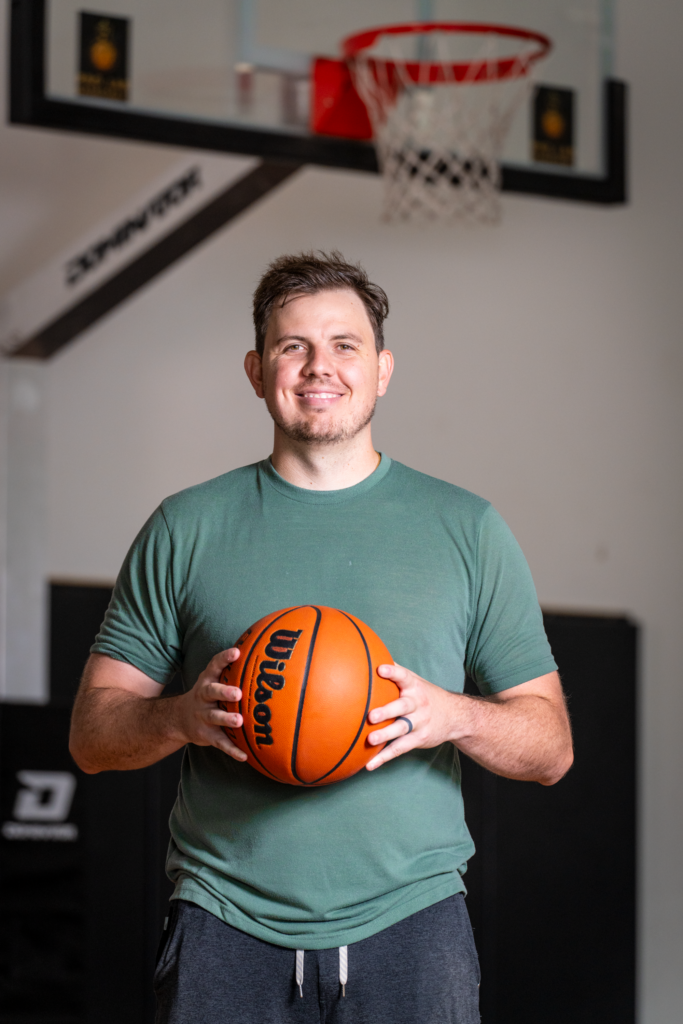
Who is Gage Jenkins?
Gage is originally from Boise, but he spent most of his adult life elsewhere. He landed his student manager role with Arizona State Men’s Basketball as a senior, after stacking basketball internships wherever he could. He worked alongside D1 athletes, watched the NIL era reshape the locker room, and decided the college and pro coaching path wasn’t basketball-first anymore.
“I just didn’t feel like that if I were to continue to pursue becoming a coach or working in the front office for a team, that the basketball side was really the priority anymore.”
So he moved back to Boise, took a full-time marketing role at a tech company, and started Sage Hoops on the side. He coaches youth athletes in the evenings and on weekends out of a rented gym owned by a club basketball family. His website goes live on CoachIQ within the week.

What’s the hardest part of starting a basketball training business?
Finding affordable gym space. That’s the answer almost every solo coach gives, and Gage is no exception.
Outdoor courts only work half the year if you live somewhere with real weather. Public school gyms require district relationships you probably don’t have yet. Premium training facilities charge premium hourly rates that don’t pencil out when you’re charging $50 to $75 per session.
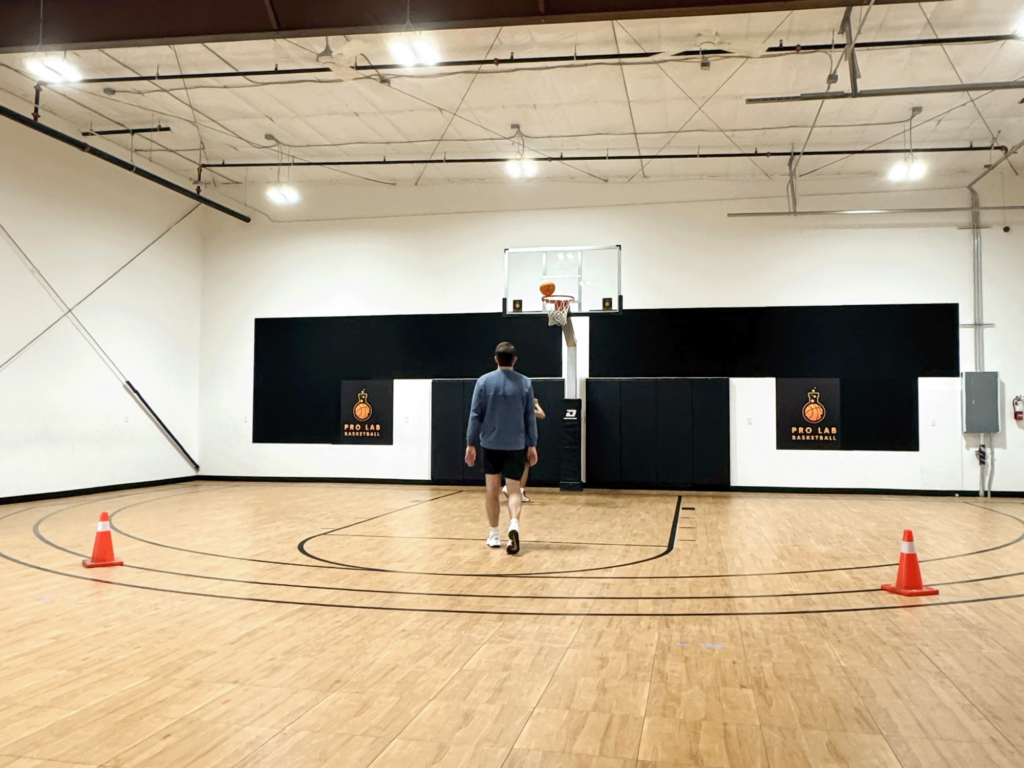
Gage started at one facility with rates so high he couldn’t make the math work. He found his current space by accident through a Google search: a small gym owned by a family with a daughter on a club team. They bought it for her, but it sat empty most of the week. So they started renting it out by the hour.
His current setup: he buys 10-hour blocks at a reduced rate, then schedules sessions inside those windows. It’s not glamorous. It works.
If you’re at this stage, the playbook is simple. Google every church, club facility, recreation center, and small gym in a 30-minute radius. Email all of them. One in twenty will say yes. For more on what the physical space side actually costs, basketball training facility costs covers the real numbers from working coaches.
How should you price your packages and memberships?
When you’re figuring out how to start a basketball training business, the pricing model is where most year-one coaches lose months. Gage was about to launch packages with a one-year expiration date.
Brandon caught it on the podcast:
“Five workouts, I’d hope you can get that done in a month. Like right now I have my credit packages, I have five credits, and it recurs monthly.”
A year-long expiration sounds generous to a parent. In practice, athletes show up four times in six months and lose every bit of training momentum. You can’t deliver a premium service to someone you see once a quarter.
Gage rebuilt his offer in real time during the conversation. His new structure:
- 5-pack and 10-pack of individual sessions with shorter expiration windows
- Small group session packs at a lower per-session rate
- Memberships at 1x, 2x, or 3x per week
That’s the right shape for a year-one coach. Memberships create predictable revenue and incentivize the weekly consistency that produces real results. Packages cover families who can’t commit to a recurring spot. Both need realistic expiration dates, not generous ones that quietly sabotage the athlete’s progress.
Why move off Venmo and spreadsheets
Gage built Sage Hoops on Squarespace and ran payments through Venmo. It worked. It also created the worst part of his week.
“I hate it more than anything. If there was one part of this coaching business it’s that… having to go to parents or any of the athletes and be like, hey, just a reminder, I need to get paid for this session.”
The fix is structural. Move payments behind the booking. Athletes can’t reserve a session until they’ve paid. The platform handles the reminder. The coach never asks.
That’s why he’s migrating Sage Hoops onto a centralized system that handles his coaching website, automated payment processing, and session booking in one place. That’s the year-one upgrade most solo coaches make once the manual chase eats too many hours.
How to market a basketball training business with zero local reputation
Gage had a marketing background. Most coaches don’t. He still went door-to-door putting flyers on outdoor courts in his first weeks and got zero clients from it. Two things actually worked:
- Meta ads. He filmed a single video over the summer, ran it as paid social and Google search campaigns, and started getting leads in a city where he had no basketball relationships.
- Referrals. Once those first paid-ad athletes were in the gym and getting results, their families started sending other families.
His long-term plan is to taper ad spend as referrals compound. That’s the right plan. Paid ads buy you the first 25 athletes. Referrals build the next 75.
If you’re in a new market, the math is the same. You need professional content and a small ad budget to introduce yourself, then a service good enough that the first families talk about it.
For coaches earlier in the process across any sport, how to start a private sports coaching business covers the broader startup playbook.
The bottom line
Year one of a basketball training business is gym hunts, pricing experiments, and late nights. Gage Jenkins did it on top of a full-time job, in a city where he had no basketball reputation, with a Squarespace site and a Venmo account.
What he’s getting right: he’s investing in real systems before the chaos forces him to. He’s pricing for consistency, not convenience. He’s willing to redesign an offer mid-conversation when a peer points out a flaw.
If you want the year-one template for how to start a basketball training business and you’re tired of chasing payments, book a free CoachIQ demo and see how it works for your business.
Full transcript
Show full transcript
### Welcome and intro
Brandon Evans (05:15.095)
Welcome back to the Coach IQ podcast. I am your host Brandon Evans, a fellow training business and facility owner. Today we have Coach Gage from Sage Hoops out of Boise, Idaho. Gage has a really interesting background. He is at the beginning stages of building his training business. He worked with the Arizona State men’s basketball program at the Division 1 level and has trained D1 professional athletes. And now he’s building his own training business in Boise, Idaho, developing complete players, not just scores. Gage, welcome.
to the show.
Gage Jenkins (05:48.526)
Appreciate it Brandon, really excited to be here. Look forward to diving in.
### Working as a student manager at Arizona State
Brandon Evans (05:52.628)
Absolutely. So let’s get straight into it. So before we get into the business side of things, and I think there’s a lot of stuff we can talk about there. Tell me about Arizona State. What was your role there? What did you learn? And has any of that applied to your now training business?
Gage Jenkins (06:08.406)
Yeah, so I was an undergrad when I was working for Arizona State Men’s Basketball. I was a student manager my senior year. I had done a lot of internships leading up, but my goal was ultimately to land in basketball. And so that was like my, I had done an internship prior to for a former NBA athlete that lived in Arizona.
and had started a, it’s called Rebound Magazine, I’m not sure if it’s still active, but that was like my first opportunity exposure, but then really getting the opportunity to work for a program, see behind the scenes, work directly with athletes, really opened doors for me and opened my eyes to just kind of what this whole basketball thing can look like.
### Training D1 athletes vs training kids
Brandon Evans (06:57.207)
Yeah, so of course we were around that, you know, division one environment. What I always think this is a very interesting answer. What’s different about, I have my own opinions, we’re both basketball people. What’s different about training at that level versus training a 10 to 15 year old besides, you know, the obvious of they’re not as skilled.
Gage Jenkins (07:18.254)
Yeah, I think, you know, when you get further along and when you’re at that level, there’s just a lot of intentionality with everything you do, specifically with your time. You know, when you’re a college athlete, you’re being pulled in a lot of different directions and have a lot to kind of be able to keep up with, whether that’s school.
whether that’s training, practices, games, and then just your personal life. And so getting that exposure and opportunity to see behind the scenes and then just what it means to be a high level division one athlete and how you take care of your body, how you train, types of things that you consume, you eat, like all of it really is just so critical to being able.
to perform at the highest level when it comes to game time.
Brandon Evans (08:19.394)
Right, yeah, I always, when people get started in the training business, and even me too when I first started, I started about three or four years ago as far as like heavily training.
Like the goal is always, you know, like, I want to work with these high level athletes and get these pros that’ll make it mean like I made it. Um, and I was lucky enough to have internship in San Diego with Ryan Rizuki at his gym hoop house and, know, work with those guys and they’re great people. I enjoyed it and everything, but.
It’s not as it’s not always made up to be, right? I don’t know what your opinions are about it, but in my opinion, it’s not all it is made out to be. I would any day rather train a 14 year old kid than a pro, you know, unless I have a great relationship, we have some pros here that, you know, we love and everything will always support them. We’ll train them all the time, but.
Gage Jenkins (08:54.626)
Yeah.
Brandon Evans (09:12.28)
It’s not it’s not all it’s made up to be right like in my opinion as far as the actual training aspect goes I think it’s easier Like at the high higher level those kids sorry not the kids. Well, they’re adults at this point They have a specific game right and they are pretty much just staying at that level Like if they’re they play a certain role and they play it really well, they just need to get better at that role Right, but whereas a younger kid
Gage Jenkins (09:21.613)
Yeah.
Brandon Evans (09:41.219)
they’re developing all around, right? Like I’m not saying you’re not going to develop like a higher level guy to these different aspects. Of course they need to continue to get better. But as far as their workouts, like if you’re a shooter in a pro league, you’re going to stay a shooter for the most part, right? So at least that’s my opinion as far as like training pros versus younger kids.
### How fundamentals differ for younger players
Gage Jenkins (10:01.218)
Yeah, I think there’s a lot more opportunity with kids that are still developing. I mean, like you said, know, once you are in college and even as a pro athlete, there’s still always ways to fine tune and improve your game. But when you’re talking about kids that are maybe that middle school, high school area.
Brandon Evans (10:13.496)
course.
Gage Jenkins (10:23.48)
there’s a lot of opportunity to grow their game in multiple different areas and really try to develop them those fundamentals, those technical aspects. And like they may not have that specifically carved out role yet, but even if they do, you can really.
give and offer so much to them. And I think that they’re really willing to absorb that information, digest it and try to implement it and grow. And yeah, I think that’s some of the challenges potentially when you get to that higher level is the adjustments that you’re making at that point are very small, like how you’re helping them grow. I think there’s certainly opportunity there, but it is definitely different than the younger kids.
### Coming back to Boise and starting Sage Hoops
Brandon Evans (11:08.568)
extremely different. It’s all, you know, people’s preferences. Like I said, I prefer to work with youth athletes at that stage and others prefer to work with the higher level guys. It’s just preferences at that point. But so, you you have that experience, you are in the D1 environment. And when you went to start your own thing, are you are you from Boise? What did that feel like going off to start your own thing? And how did you end up in Boise?
Gage Jenkins (11:36.878)
So I’m originally from Boise. I didn’t grow up here though. So moved back here basically two years ago to quote unquote home, even though I hadn’t been here as an adult. And I’ve always just had this pull towards basketball. And I knew that it wasn’t gonna be for me to work at the collegiate level or at the professional level because
of some of the stuff that I just didn’t feel like really aligned with me and my character and what I was looking for, and the impact I was trying to have with athletes. so knowing that I could establish something that was really my own and try to build up youth basketball players into not only being better on the court, but helping them with the mental side of things, how to handle adversity, how to really grow.
on and off the court in more of a personalized setting was just something that I felt like I was looking for throughout my whole life, but just didn’t really know where to start. And I think a lot of us, we have this fear of starting something and feel like we have to have everything completely perfect before, at least on my end.
have to have everything completely perfect before we actually get going. And I know that prevented me for a while and just felt like I wasn’t there yet, but I was like, you know what, what better time? I love the sport. I love being around basketball. I want to help athletes grow and then try and impart as much wisdom as I possibly can. And I felt like this was the best way to do it.
### Why the D1 and pro coaching path didn’t fit
Brandon Evans (13:25.122)
Yeah, yeah, I’m going to take you back to one of your first statements. And if you don’t mind sharing what were, what were some of those things that weren’t completely fulfilling you being at that level. And the reason I ask is because like I said already, when a lot of people start out, they want to get up to that level. Right. So you were there and you didn’t feel fulfilled. Right. So if you don’t mind sharing what were some of those things that, that didn’t really fill the cup for you.
Gage Jenkins (13:54.766)
I think the further you go, and I don’t wanna speak for everyone here, but I think the further you go in the industry, and especially in just collegiate athletics right now, right with the NIL environment and a lot of the stuff that’s going on behind closed doors. I think that was the side that just wasn’t.
It didn’t align with me and my values. I’ve always been in this because I love basketball. I love the competitive nature of it. I love seeing people. I just love the sport so much and I always have and I always felt like I had a lot to offer from my understanding of the game. But I just didn’t feel like that if I were to continue to pursue
becoming whether it was a coach or working in the front office for a team that the basketball side was really the priority anymore. And that was what was important to me is making the basketball side a priority and then secondarily, like the type of character you have. And I feel like in a one-on-one
environment or in small group environments. I can really develop relationships and it’s not transactional and really try to just like help athletes again be the best version of themselves whether or not that they’re gonna play at the collegiate level or professional level. I don’t care about that. If that’s your goal, I will try to bend over backwards to help you accomplish that. But ultimately my goal is for you to
grow to be the best version of yourself on and off the court. That’s my ultimate goal.
### Why basketball takes a backseat at the higher levels
Brandon Evans (15:49.85)
Right. And yeah, I love that you said that because I mean, very similar experience to myself. Once you see at that level, like there’s so much other stuff that goes on. You think it’s all just strictly basketball. It’s not. All right. Like there’s so much other stuff that goes on and you were involved quite a bit more than I was at that level, but you got to see it.
Right. So I think that’s a really valuable point to anybody that is wanting to try to get into training and maybe has that vision of, I’m going to be a pro trainer, a pro coach, a pro this. It’s a different world. It’s a different world. Basketball might take a backseat to a lot of other stuff.
Gage Jenkins (16:31.96)
Yep.
### Finding gym space as a new trainer
Brandon Evans (16:32.001)
Right. So I just wanted to ask about that because it’s unique. You got started up in that field and now you’re going to start your own thing. So that naturally leads me into my next question. Let’s talk about Sage hoops. So you’re Boise now you’re training. Correct me if I’m wrong out of pro lab basketball is walk me through how you got that set up. What is pro lab basketball and how do you run your business out of there? So you’re just by yourself now. So talk us through that part a little bit.
Gage Jenkins (16:50.21)
Yep. Yep.
Gage Jenkins (17:00.298)
Yeah, I think probably most trainers when they’re getting started, know, obviously you have to try and find clients and that’s, you know, the one of the beginning aspects. But I think the other most difficult aspect is trying to find a gym. And if you don’t have your own facility and most of us aren’t fortunate enough to when we start to be able to purchase our own facility, you have to find somewhere to be able to train out of and
Brandon Evans (17:14.681)
Mm-hmm
Gage Jenkins (17:27.35)
I know a lot of people when they get started, they will do outdoor training and I’ve done that some myself, but also being in a location where, know, six months out of the year, outdoor training is kind of off the table, weather permitting. Trying to find a facility that would allow me to come in, train athletes and wasn’t going to charge me an arm and a leg.
to do it was difficult. So I had to do a ton of research. I started out at one facility and I felt like their rates were super high and I was just, I didn’t have a great experience there. And then luckily enough, just by a Google search, I stumbled across this page for a gym that is owned by a couple of parents that have…
a daughter that plays club and is in high school basketball, they also started to, they bought this facility to allow their club team, her club team to be able to train there. And then obviously there’s still plenty of hours when it was not being used. So they started to rent it out. And so it’s been just a blessing for me because that’s really where I hold all of my lessons at this point. My goal long-term is to eventually own my own facility.
But you know, that’s a journey. And I’m just like, I’m super grateful to have a place where I can, for the most part, like really be able to reserve it whenever I need and get athletes in a space where they don’t have other distractions. There’s not pickleball going on in the next court over or, you know, a volleyball match or something. Like, and that was what I was running into. And it’s like, I wanted a dedicated space where it felt.
like a premium experience where they could come in, get the work in, and have a dedicated space to really grow.
### Renting from a family-owned facility
Brandon Evans (19:32.012)
Yeah. Yeah. That, I mean, you nailed it. That is one of the hardest, hardest roadblocks for trainers just starting out is having a space to train out of whether it be outside, whether it be at a different gym or whether it be wherever, but
you got lucky enough. mean, you got lucky just like I got lucky. Like I said, I’ve I’ve been doing this three years I opened up my gym like a year and a half ish ago. But when I started, this is something that any any trainer can do. I just like you did I googled and I googled every church in my city. And I sent them an email I said, Hey, this is what I’m trying to do. Do have gym rental? And eventually, one of them
One of them actually got referred to me by somebody else because they were just like a hole in the wall, not hole in the wall, but they were off in middle of nowhere and they needed people to rent their gym. And I got lucky and pretty much just, they let me use their gym whenever. Now, what does your agreement with them look like? Because I’m just curious, my agreement with my church when I first started, and you don’t have to get into this details, I’m just asking if it’s like hourly or however, my agreement when I started was $5 per kid per hour. So it helped me in the short term, helped them in the long term.
Is yours hourly? Is it a monthly fee? What does it look like?
Gage Jenkins (20:52.3)
Yeah, they offer packages that are hourly. So it’s like a reduced rate if you buy basically 10 hours at one time. And so that’s what I do is I’ll just purchase their package, which includes 10 hours and I’ll do it that way. And that’s worked really well for me. I think I made the mistake of trying to…
Brandon Evans (20:55.597)
Nice.
Gage Jenkins (21:17.46)
share about it so much that others, other trainers started to see it because again, gym space is hard to come by. And so other traders found it and started to utilize it. And there’s no gatekeeping here, but you know, obviously like I want to be able to try and reserve when my athletes are available. I try to be flexible as much as I possibly can. And so that’s just kind of the nature of the beast is other people are going to come across it. They’re going to find it and they’re going to utilize it.
Brandon Evans (21:22.456)
Yeah.
Brandon Evans (21:35.865)
course.
### Trainer competition vs trainer community
Gage Jenkins (21:46.882)
You know, I think that that’s, it’s, believe in that, like, it’s not this, maybe we’ll talk about this a little bit, but there’s a lot of trainer to trainer competition out there. And I think sometimes it can be not as healthy or productive. And I’m more of the belief that if we can kind of work as a community to really try and just help basketball and help kids grow, then they’re benefiting and we’re benefiting.
Brandon Evans (22:15.681)
I agree. mean, that’s that was a big jump. I’m under this exact same perspective. Like when I was bringing on trainers at my gym, I was hiring staff like I was at first. I’m like.
I’m good at what I do. Like if somebody’s be able to, don’t want to, is somebody gonna, the kid’s gonna like them more than me. But ultimately I had to remind myself like, am I in this for? Right? I’m this for the kids. I believe I’m really good. Why would I not want to teach somebody else and be able to kind of duplicate what I do and let coaches get their own voice and be good influences for the kids. Right? So that’s, that’s, I’m under the same perspective as you a hundred percent. And
Gage Jenkins (22:38.38)
Yeah.
Brandon Evans (22:59.191)
Back to your original point, something that really helped me when I was renting my church church out was I really, really, and this is business in general, but I really focused on nurturing my relationship with the owner of the or the person, the staff at the church. Nobody really owned the church, but.
I would go out of my way for them. I would help them set up for their little banquets and whatever they had. I ran fundraisers for them. I donated a good amount of money. And because of that, we became really, really close. now I have some friends for life at the church. And it helped out the business in the long run.
So just, just developing relationships. And that’s something we talk about a lot on, on the podcast with the coaches is every single one of them has been able to succeed because they develop relationships with people and they’re good people. help people out and ultimately they get helped out in return. Right. Of course you don’t go into it doing it for your own benefit, but you do it for other people. And ultimately you get, you get benefit in return. So just a, another point that I wanted to touch on there.
### Balancing a full-time marketing job with coaching
What does your week look like? So you’re just by yourself now, correct? Just you. So what is a typical week look like for you right now? I know it might be a little bit different because you’re in basketball season right now. And at least for me, it’s a little bit slower. Let’s take ourselves forward. You know, maybe a couple months basketball season is over. What is a typical week look like for you? What’s your ideal week? How many sessions are you running? How is it structured?
Gage Jenkins (24:17.49)
Correct, yep.
Gage Jenkins (24:38.892)
Yeah, I think that’s something I’m still kind of learning. This will be my first off season where I actually have something that’s established. Last year was really just trying to get going. And, you know, I currently work full-time, so I have a full-time job in addition to basketball. So I do marketing full-time for a tech company based here in Boise. And so do that during the day.
Brandon Evans (25:02.435)
Nice.
Gage Jenkins (25:08.674)
it’s nice that it’s flexible, but then on the evenings and weekends, I’m pretty much tied up with, with, basketball. And I intend for that to really, stay that way for the foreseeable future until I’m, really able to transition, to this being my, my full time, my full time thing.
### Current pricing and the chase for payments
Brandon Evans (25:29.4)
Right, yeah, I think this is a cool opportunity. can kind of talk back and forth on how, if you’re open to it, how you can set up a plan this next year to get to your full-time ideal situation. So.
We can talk back and forth a little bit on this. What is your, do you just do basic per session pricing right now? Do you do packages? What do you do as far as, you know, somebody wants to train with you? What do you say you offer?
Gage Jenkins (26:01.71)
Yeah, I had kind of gone back and forth. So when I started, I was offering packages and I felt that they were a positive thing, but without having like a dedicated platform, not to give like a plug, but really for Coach IQ, I didn’t have like a dedicated platform. I built my website. Having a marketing background really helped me. I built it on Squarespace and then I was just really doing, you either cash.
Venmo transactions and I still am currently, but I’m in the process of migrating everything over to Coach IQ. And when I do that, I’m gonna have packages and memberships in addition just to individual sessions. But currently I’m really just doing like individual session pricing. And it’s, I feel like that’s been effective for me, but without having like a dedicated platform.
where I can have everything funnel through all of its organized. Like it’s just, it’s kind of hard to really stay organized. And I don’t like having to go to parents or any of the athletes and be like, Hey, just a reminder, you know, I need to get paid for this, this session. Like I hate it more than anything. if there was one part of this, one part of this coaching.
Brandon Evans (27:18.041)
the worst.
Brandon Evans (27:23.618)
It’s the worst.
### Why a centralized platform changes the ask
Gage Jenkins (27:28.972)
business is it’s that. And so I’m really excited about having my website set up through Coach IQ where everything will just be done on the website. I don’t have to come and ask and if you’re, if you’re able to do it, great. And if not, you know, then, you know, we’ll figure something out, but that, that part of it has been, I think a learning curve for me really is trying to understand like, okay, how do I grow this?
but also stay organized and continue to offer value. Like for me, it really comes down to value. Like I wanna be able to sleep at night knowing that if I’m charging parents or athletes that I’m providing value to them. And I think as I’ve gotten more and more athletes, it’s just became harder and harder to really stay organized without having a dedicated platform where everything’s funneled through.
Brandon Evans (28:24.122)
And that’s you’re about at the stage where, like you said, you need that dedicated platform. I remember like I was keeping stuff out of Google Sheets and I had my classes every week. I kept them in Google Sheets and I had them color coded and everything, which is fine. But once it got to a certain point, like I had no it was just too much. Like it just simply was too much. and that’s conveniently where I found Kojic you hum and.
Gage Jenkins (28:33.144)
Yep. Yep.
Brandon Evans (28:51.982)
Being able to, have a question about one of your earlier statements with your membership. So being able to have everything in one spot, it saved me so much time and just convenience. And like you said, you don’t have to ask people for money. Like they have to, they gotta pay before they can even book your class in the sessions feature. I’m not sure if you checked it out yet, but.
You can set it, I mean, you can set it to where they don’t have to pay, but I set it to where they do. And that way you don’t have to ask. And I have, my gym is mainly memberships. So it’s almost primarily memberships. So it just comes out recurring every month. I have not had to ask somebody to pay in a long time. And even if I got gym rentals and everything, even if somebody wants to rent the gym, they request it and they have to pay before they can book their time.
Gage Jenkins (29:38.382)
.
### Designing memberships and session packs
Brandon Evans (29:41.049)
So it’s never like, never have to go up and say, Hey, like, you you got to send me that FENMO because it is, it is the absolute worst thing in the world, regardless of how good your product is and how confident you are, it is the worst. So you mentioned you’re trying to get into, you know, memberships and packages. Do you have an idea of what that’s going to look like? And like, what is, what is your thought as far as that goes right now? And then maybe I can kind of share what, what I have going and what some other coaches might have going.
Gage Jenkins (29:47.425)
Bye.
Gage Jenkins (30:09.356)
Yeah, I really did a lot of research on…
what other trainers and coaches offer. I wanted to expand my offer but not make it too complicated. And I felt like my first iteration of it was too complicated. So what I’m planning to offer is individual or private session packages, five and 10, and same thing for small group sessions. And then memberships, which are just either…
once a week, twice a week, or three times a week. And so kind of structuring it that way. And obviously there’s a price discount when you go with a package or a membership versus the individual sessions. And I think currently for my setup, like I’m only doing the individual sessions and there weren’t really packages or anything like that. And so I want to be able to reward or offer incentivization to the people that are.
Brandon Evans (30:54.681)
Yeah.
Gage Jenkins (31:07.406)
wanting to train regularly and continuously versus someone that maybe just wants to get in the gym once. Not that there’s a problem with that, but for those people that are really in it for the long haul and really are invested in their growth or their athlete’s growth, I wanna be able to offer something to them that is easy to access. It’s…
pretty seamless and it’s really set up for their success.
### Why the one-year expiration date was too generous
Brandon Evans (31:37.968)
Right, yeah, and the packages points. I did packages when I first, when I started up and I have credit packages still at my gym, but the key with those is…
And I’m not sure if you considered this or if you already have it set up, but just a point I wanted to mention is having a use by date on that is, is huge because I mean, I still sold memberships to start, not memberships packages to start, I was like, yeah, you get five, five workouts for however much. And like, like two months ago by, and they still have like three left. So like having that, having an expiration date on.
the workouts or the credits, whatever, whatever is a realistic, know, understandable date, like five workouts, I’d hope you can get that done in a month. Like right now I have my credit packages, I have five credits, and it recurs monthly. So that’s what that looks like. And you can make five workouts in a month. Or even if you get four, it’s still affordable.
But yeah, just a point I wanted to make on that. Not sure if you were considering it or not, or if you had that already planned out, but regardless of people are listening, if you sell credits or session packages, having an expiration date on those is huge. Whether it be, go ahead, yeah.
Gage Jenkins (33:04.728)
Yeah.
I was just gonna say, glad you mentioned that. And I did plan to have it, but I think, you know, just being transparent, think my probably current date that I was, I had set up, you I’m working on the backend right now. My goal is to have my Couch IQ set up live by next week. So really excited for that to happen as I’ve been spending a lot of late nights working on it. But I had originally planned for it to be a year, like allowing that, but just hearing you talk about it, I’m like, okay, that is,
Brandon Evans (33:25.999)
Yeah. Yeah.
Gage Jenkins (33:37.068)
That is way, way too long. I think I come from this background of wanting to provide a service that is, it’s providing a service, right? Like no matter what field you’re in, when you provide a service to someone, you want to have a positive experience and are for them to have a positive experience and for it to be a premium service. least that should be the goal.
I think I probably had the mentality of maybe a little bit too long of flexibility there. So I’m glad you mentioned that.
### How parents react to shorter expiration windows
Brandon Evans (34:15.639)
Yeah, it’s, and you know, that’s obviously a natural thought to have. The way I, if I ever get any kickback from parents, it’s, I justify it in that.
I can’t do my job, my service can’t be premium if you stretch five workouts over a year because it’s like, I don’t know about you, but I can’t really get somebody better if they come in five times in a year. And people understand that. If you want to continue to get better as a player and you want your service to be good, like…
Gage Jenkins (34:35.33)
Right.
Gage Jenkins (34:41.398)
Yep.
Brandon Evans (34:51.343)
got at least be able to come in once a week, ideally two or three if possible, but at least once a week. And you know, if you can’t come in once a week, then maybe it’s not a fit right now and that’s okay. So just having that’s the way I justify it to parents and every now and then I’ll get, I’ll get a little kickback from it. But every time I say that they understand, right? Like I want to be able to deliver that, you know, premium service.
Gage Jenkins (34:54.638)
sure.
Gage Jenkins (35:04.974)
Sure.
Gage Jenkins (35:15.694)
Right.
Brandon Evans (35:19.437)
And in order for that to happen, there has to be some consistency right there. Right. And they understand and usually, usually they end up coming once a week and everything is fine. Right. So yeah. Yeah. So, yeah, that’s, that’s a key thing, just a, a realistic expiration date for, for credits or sessions, whatever you call them. so another thing I wanted to touch on, you know, you’re in the marketing field. How are people finding you right now?
Gage Jenkins (35:28.75)
Sure, sure, there’s always blind riders though, right?
### Marketing year one: flyers, meta ads, and Google search
Brandon Evans (35:48.891)
Is it word of mouth? Is it social media? Something else? What does that look like?
Gage Jenkins (35:54.678)
Yeah, I mean, having that marketing background has just been extremely valuable for me to get my business going and start to attract clients. So when I started, I actually created flyers and I drove around all of Boise and the neighboring cities and I just went and took them on outdoor gym.
Brandon Evans (36:00.014)
Yeah.
Brandon Evans (36:18.319)
Yeah.
Gage Jenkins (36:21.93)
or outdoor basketball courts, like wherever I could. And that was how I started. I don’t think I got a single one out of it, but I was like, I’m serious about this and I’m gonna like hit the pavement and try to put myself out there, you know? And if one comes through it, great, if none, whatever, at least I know at the end of the day I’m making an effort to really get this going. But then I started to do meta ads.
I did a video shoot this summer, so, or last summer, I knew I wanted some, some content. So I had a videographer come in, do a, do a video that I could use for meta ads. And then I started to do some, some Google search ads as well. So those are really the two primary areas I’m doing like digital marketing in addition to social content. But I will say, you know, like I do get still quite a bit of interest from those, those ads, but.
### Referrals as the long-term marketing play
The greatest leads or the greatest new clients are referrals. so goal long-term is to really be able to wind that down, still execute some advertising, but really just to have and offer such a great experience to my clients that then they want to talk about it and refer me to others.
Brandon Evans (37:45.914)
Yeah, that.
That’s a great point. You, you nailed the two areas that, I try to focus on in my gym are our meta ads and the just referrals, right? Like I always tell, I’ll tell people that, you know, the greatest marketing you can have is your own people that are, you’re already in your gym, right? Cause they’re already people that really trust you. absolutely love you and they know the people that would love you as well. And they’re getting referred by somebody. So they’re all you’re already in a positive life.
you’re not a stranger to them because they’re being referred by anybody and and meta ads I don’t know how to run those Coach IQ actually offers a service that runs mine so I they just do it for me and I’ve seen some really good results which then lead to referrals so that’s why I like to always have ads running whether I’m having to run a lot like I’m about to start start
Gage Jenkins (38:28.056)
Thank
Yeah.
Brandon Evans (38:44.751)
funding them a little bit more, just because you know, basketball season about to end. And thinking marketing wise, psychology, kids are either, I had a really bad season and I want to get better. Or I had a really good season and I want to keep it going. So and then they have the absence of basketball in their life. Or again, that’s going to apply to any sport absence of football, whatever.
Gage Jenkins (38:59.746)
Yeah.
Brandon Evans (39:07.151)
And they want to get back in, they want to train, they want to get better and just be around basketball again. So that’s a peak time for ads, whether you do it on your own or somebody does it with Coach IQ. It’s a peak time to do it. You got to understand the psychology of where kids are at. But even during season, I’ll just, you know, I’ll fund them a little bit, just so they’re ran, you know, people see things and you never know. Like I have from those ads, I’ve had a kid.
that has come in, they bought a year membership and they referred three or four players. So like that already gets back your ad spend if you do spend money on ads. So yeah, those, yes.
Gage Jenkins (39:43.214)
100%, there’s a lot of return on investment on that. And I think for people that are getting started again like that, fear of, okay, where do I begin? And how do I attract people? For me, even though I’m originally from Boise, not having any basketball connections here made it hard to really kind of establish a footprint and then attract clients. So, and I don’t know if I didn’t do the meta ads.
Brandon Evans (40:06.278)
Right.
Gage Jenkins (40:11.094)
I don’t know if we’d be having this conversation because I knew that it was a priority. again, having quality content that then you can use to leverage your brand and attract people that when you don’t have those relationships or a built-in reputation in a community, like there are going to be people, there are plenty of parents or athletes, they don’t know where to look. They don’t know how to find coaches or…
what’s the best way to find a trainer. And so having that ability to put stuff out there really pays dividends.
Brandon Evans (40:49.722)
Yeah, like some families, parents might not even know how, like you said, for their kid to get better. They might not even know that they want or need a trainer. And then they might just happen to see an ad and they’re like, you know what? This looks cool. Let’s do it. Right. And it just takes one. It takes one, two.
And then it’s just a snowball from there. So they’re, they’re, very powerful when it comes to that. And I mean, if you don’t market, people don’t know you exist. Right? Like the only way people are going to come to your gym or your program is if they see you and know you exist, otherwise nothing’s going to happen. So marketing is extremely important and you have obviously a background in that. So you’re a step ahead. you know, you can post social media content and everything and it’s,
Gage Jenkins (41:20.654)
Thanks a lot.
Gage Jenkins (41:29.868)
Exactly.
Brandon Evans (41:40.143)
you know, free marketing and all that, it only works to an extent, right?
### The hardest parts of running a solo training business
So that’s those two areas are areas that I like to focus on are you know, your referrals, your really focused on your referrals, and then always having some sort of Facebook ads, Instagram ads running. So we talked about a little bit about you know, some of the difficulties of starting on your own. What would you say is the hardest part of building this on your own now that you have the gym space?
Gage Jenkins (41:58.03)
for sharing.
Gage Jenkins (42:11.616)
Yeah, I was going to say the first thing is certainly gym space. You know, I think after that, it’s really like for me having a full-time job, that time management ability, how do you leverage your time? because I’m still trying to grow as a trainer. there’s, there’s
Brandon Evans (42:38.289)
Right.
Gage Jenkins (42:40.066)
the aspect of me trying to attract clients, which requires me to not only do the paid advertising, but I’m trying to always do organic content as well to supplement that. if anyone comes to my page, also trying to just be active on social so that I pop up when people are seeing stuff in my area. And so I think people underestimate how much work goes into
not only filming content, but editing content. Like it takes a lot of time and I’m, like I said, I’m a perfectionist and super critical of myself. And so I want the content that I put out there to not just be fluff per se. Like I really wanted to try and provide value and represent like what I believe in from a basketball perspective. But so there’s that aspect, but I also think like, I don’t know everything when it comes to basketball and.
individual training or group training. like always trying to find a way to improve as a trainer. That just requires time. Like not only time in the gym, but time online, researching, watching videos. I want my time with my clients to be as effective as entirely possible for them.
really to like maximize our time together. And I think that’s kind of really how I evaluate myself is do I feel like I provided a ton of value to them today and that we maximize our time together? I know I answered that question with like a few different things because I really don’t think it’s just one thing. think that that’s the challenging part but it’s also the beauty of this is
There’s a lot of different things to focus on that all kind of come back to basketball. And for me, it’s like, how can I improve so that the athletes I work with, that they have the best experience and get the most out of it as entirely possible.
Brandon Evans (44:59.322)
Right, mean, you nailed it. There’s a lot that goes into it, right? Like you have the marketing side that we just talked about. You gotta make sure your social medias are good. And then you have the actual delivery side, which is you have to make sure your training is good. You have to make sure your communication is good. You have to make sure all of this stuff is good for a well-rounded experience, right? So when people leave or if they leave and they’re done training with you for whatever, they get older, they don’t like basketball, they can say,
I had a fantastic experience with him and I would 100 % go back if you I was still playing or whatever. So that’s you nailed it. There’s so much that goes into it. Like you think at bigger businesses, this is how I’ve always viewed it. At bigger businesses, like they have whole staffs, they have a marketing staff like you you work in marketing, right? So it’s like they have a whole social media staff like I handle all the content at Coach IQ.
Gage Jenkins (45:49.069)
Thank
Brandon Evans (45:54.205)
and they have whole, you know, the people that are actually in the business and doing the things. It’s like, so for a trainer to do all themselves, it’s hard. It’s hard, but.
Gage Jenkins (46:04.941)
Yeah.
Brandon Evans (46:06.542)
it is very rewarding, right? When you’re getting better at it and you’re seeing success and you see the value that you bring improving the kids and the kids getting better, it’s very rewarding, you know, personally and, you know, morally for the kids. And it’s good just to see your work pay off.
Gage Jenkins (46:26.124)
I would say that’s the word I would describe it as it’s extremely rewarding. Like I think for me, starting this and really allocating and focusing on basketball for me at this junction in my life has just been so valuable and rewarding is really the word that I come back to. It’s just, it’s extremely gratifying to be able to do it, spend time with these kids. There’s a lot of…
late nights, early mornings, but like it’s just super rewarding.
### Making money and doing right by the kids
Brandon Evans (47:01.818)
Yeah, and that’s the nature of it. That’s why I even got into in the first place. If I can love what I’m doing and truly love it, it’s going to be successful. And I never doubted that. I love what I’m doing. I love working with the kids. I love the environment it all creates. I love being a positive impact. So it’s going to be successful. But if I got into the training business for money,
I don’t know. Like, if I was getting into it for money, you better have a player development person that’s handling all the workouts. If you want to be successful, because you will eventually burn out. There are great ways to make a lot of money in this field, but it also has to be done the right way. And you have to be passionate about it.
Gage Jenkins (47:42.936)
Yep.
Brandon Evans (47:51.742)
And there’s ways to make money while also doing right by the kids. So you can do both in my opinion. At least that’s what I feel we’re doing at my gym right now. Yeah.
Gage Jenkins (48:01.58)
Yeah, and I mean, can sleep at night, right? Too, is like, is knowing that you are having a positive influence, making an impact with the kids, the families, but also you’re able to bring in income. Like, I don’t feel like they have to be mutually exclusive. And I think as long as we all know what our intentions are.
And if our intentions are to really help and make an impact, I think like you described, if you have love for it and really put your heart and soul into it, the money aspect will come.
Brandon Evans (48:40.283)
Yeah, and that’s an understanding I had to grow to believe was that you can make money and you can do right by the kids at the same time. I always thought, if coaching is no way to make money, you just have to be in it because you love it. And I was fine with that. But.
You understand you put your all of this time that you’re putting into it, right? You are putting into a completely focused on them to delivering an amazing service. Right. And if you, you know, I reinvested everything and I was able to build a gym and I wanted to do this on a bigger scale. And I surrounded the gym with staff and of all good people. So if, if I never adopted that mindset of.
of what we’re talking about, you can do right by the kids and make money at the same time. I would be doing this on a much smaller scale. I would much rather have my impact at the gym or my gym’s impact be much larger and be able to affect more kids because I know we’re in it for the right reasons. And you know that there needs to be more of that in the youth sports world nowadays. So
Being able to collect money and deliver an amazing service you deserve to be paid for it You just do right and you can make it fair for families to where you’re not getting ripped off and they’re not getting Taxed as far as the price goes
And they they’re happy with their service. You can offer on a bigger scale. You can affect more kids and deliver ultimately an amazing product. And like you said, ultimately value, which, which is the thing that if you focus on that and it’s going to be, it’s going to be a successful thing for you. So last question here for you, what is next? know you’re getting your coach IQ sites set up and you’re trying to get your membership set up. Do you have a, an ultimate goal for.
### What’s next for Sage Hoops and the mental-side play
Brandon Evans (50:35.903)
for this year, you know, the year just started, is it to just be comfortable with your system? Is it, you know, maybe start looking for a facility? What is your ultimate goal for the end of the year?
Gage Jenkins (50:48.802)
Yeah, I have pretty big ambitions. I don’t know if I’m going to be ready for my own facility by the end of the year, but I’m getting ready to go on to Coach IQ, which I’m super excited about. think it’s just going to elevate my business and then help me be more organized in a lot of different ways. I’m about to have my own apparel website. So I’m excited for that to have some Sage Hoops merchandise that will be available.
people to be able to purchase or for me to actually have my own branded apparel. So I’m super excited about that. I think for me this year, and we didn’t really touch on it, but a part that I’m really trying to figure out is I am super passionate about the on-court stuff, but I am extremely passionate about just the mental side of things when it comes to.
Brandon Evans (51:33.821)
Hmm
Brandon Evans (51:43.804)
Yeah.
Gage Jenkins (51:44.884)
athletes, but just also day-to-day life and the challenges that we go through. think that it’s all connected. So my goal for this year is to really figure out how I can offer a more well-rounded service to athletes and Boise, but also potentially nationwide that is focused on the mental side of sports, but also just day-to-day life.
I think that it’s just such a aspect of it that is often forgotten or disregarded or just not thought of as as important as the athletic ability. And so I want to ultimately be able to impact people on their basketball journey, but also just their journey and life and how they kind of be able to take adversity, how they have confidence, how they approach just challenges and setbacks and
wins, losses, how they handle themselves as people. That’s my goal is to be able to pair the two and really offer a well-rounded service to athletes.
Brandon Evans (52:57.539)
Yeah, that’s a great point. it leads me into what you were talking about earlier with offering memberships. I think you’ll be able to get there if you can offer memberships, which is something that we try to push is when you offer that membership, it then becomes not just per session value.
right? Like if somebody has a membership at your gym, mine are unlimited classes is just how I do it. You can do multiple one, two or three times a week is whatever. However you want to do it. But
calling it a membership, can then include like you can have maybe another tier if you want. You can include like maybe you have Wednesday, you know, mental training. And I don’t know how deep you’ve gotten into Coach IQ, but there’s a whole online training part of it that you can
upload videos, programs, and make a whole online training app for the kids. So that’s another piece of value that you can add. Maybe you can rent out that gym for two hours a week and you can have open gym for fifth or eighth graders. So you’re, you’re at a good spot and I think you’re going to be able to
to get to where you want to go because you’re already leaning towards the memberships and you know what you want to do and you can add that value, especially you’re moving over to Coach IQ, you have the online platform, people sign up through there. It’s already in the same exact place where they book their classes and where they get announcements and everything. So it’s just, it’s an easy, easy add on that provides a lot of value. So yeah, that’s, that’s, that’s great. You’re at a good spot and I think you’ll for sure be able to achieve that once you get your website.
Gage Jenkins (54:35.18)
Yeah.
### Where to find Gage
Brandon Evans (54:39.475)
set up and everything. but awesome. Well, gauge, thanks for coming on and talk about you know, the D one experience and really honest look at what it takes to to build a training business from scratch and you know, taking a marketing background and taking it into the basketball training world. Let people know where they can find you.
Gage Jenkins (54:58.028)
Yeah, appreciate that Brandon. I really am grateful to be able to talk with you today and thanks to Coach IQ for being able to help on the platform. Yeah, Sagehoops.com or Sagehoops on the various social media platforms. Come check me out. Love to connect. Love to connect with other trainers and others in the community.
Brandon Evans (55:19.495)
Nice. Yeah, absolutely. We’re excited to share this episode. Go follow Gage. We’ll put all of his links down in the description. If you’re in the Boise area, look for training. Now you know got to go to. Okay. Thanks for listening, everybody. Gage, thank you for coming on.
Gage Jenkins (55:33.23)
Thanks, Brandon. Appreciate it,
